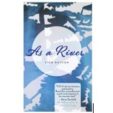
In her reflective and lyrical début novel, As a River, Sion Dayson explores the hazards of secrets. Whether kept or revealed, they can exact a profound toll: on those who carry them and on those who either remain in the dark or are made to confront new–and potentially life-changing–truths. With deep feeling, Dayson traces these consequences across lives and generations, portraying how those affected cope–sometimes by strengthening old bonds or forming new ones.
Falling in or out of love
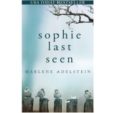
In a clothing shop at a local mall, Jesse Albright turns away from her ten-year-old daughter, Sophie, for a moment. When she turns back, she finds that Sophie has vanished, as if into thin air.
Six years later, as Marlene Adelstein’s gripping and affecting début novel begins, Sophie is still nowhere to be found, and authorities have all but given up on the search for her. But Jesse hasn’t. Although almost everything about Jesse’s life has changed–she’s withdrawn from friends and neighbors, split with Sophie’s father, Cooper, and taken to drinking heavily–she continues to hold out hope that Sophie might be alive, somewhere. And in what Cooper and others see as hoarding caused by grief, Jesse fills the home she once shared with him and Sophie with found objects, seeing them as clues that Sophie has sent her to decipher.
With scope, depth, and feeling, The Book of Jeremiah, Julie Zuckerman’s debut novel in stories, examines pivotal experiences in the long life of a single character, exploring how these experiences shape him, change his perceptions of himself and others, and reverberate across time. The result is a moving, multifaceted portrait of a life, in all its dimensions.
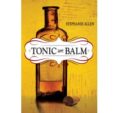
This entertaining and deeply affecting novel-in-stories, set in 1919, immerses us in the lives and travails of various members of Doc Bell’s Miracles and Mirth Medicine Show, a traveling ensemble of musicians, acrobats, and other performers who, depending on chemistry or circumstance, find love or discord, common cause or conflict, with their fellow show members. Allen takes us into the heart of these relationships, and into the interior lives of individual characters, creating an illuminating and satisfying experience for readers.
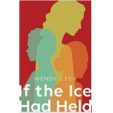
The title of this layered and compassionate novel echoes a question that is often asked in the wake of a tragedy: “How might things have been different if _____ hadn’t occurred?” While the novel considers such what-ifs, it is mainly concerned with real consequences–in particular, the ways in which a tragic, unexpected loss upends the plans and dreams of the people it affects, leaving them to try to reassemble their broken lives. By weaving together the stories of multiple characters who are affected by such a loss, Fox portrays this process with insight and empathy, and shows how it can deliver unanticipated gifts.
More often than we might care to admit, we enter marriage or other committed relationships with more haste than reflection; we move forward without clearly thinking things through or fully imagining what a future with this partner might look like given what we know (or sense) about them and ourselves.
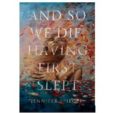
In her painfully honest, witty, and perceptive new novel, And So We Die, Having First Slept, Jennifer Spiegel acknowledges this reality without judgment, and without suggesting that such relationships are necessarily doomed. Instead, through the struggles of the married couple at the center of the novel, Spiegel makes the case that it’s never too late to confront the most difficult truths about our partners and ourselves, which offers at least the hope of transformation or redemption—something denial never does.