
With a detective-protagonist who has a troubling personal connection to the murders she’s trying to solve, and who could face an unimaginable loss if the killer remains free, this psychological thriller enthralls from the first pages. And the thrills of Swallowtail run deep, as the novel also explores the powers of myths and art, and everything that can be gained or lost when someone must fully confront the traumas of their past.

Friends/enemies
This anthology, now in its third edition, offers a variety of captivating tales, from the darkly inspiring to the delightfully strange. Collectively, the stories explore a range of themes–for example, the importance of community and familial bonds, the power of resistance, the essential nature–and fragility–of love, the long shadow of loss, and the burden of feeling like an outsider, in society at large or within one’s own family or social circle.
A couple of years ago, I had the pleasure of interviewing Darrin Doyle about his spellbinding horror novella, Let Gravity Seize the Dead. When I learned that Doyle’s highly praised story collection, The Dark Will End the Dark, had been released in a revised tenth-anniversary edition, I was eager to read it–and it didn’t disappoint.
Sometimes, individuals and communities seek change. Other times, change is forced upon them, gradually or in what can seem like a sudden turn of events. Either way, the people affected must make choices about next steps, and about what their futures might look like–choices that can have lasting consequences. This smart, sweeping, and emotionally resonant novel explores how and why such choices are made within two fraught marriages, at a time when forces of transformation are at play in the larger community.
To my mind, Victors is the perfect historical novel, weaving together richly developed characters, a compelling plot, and a solid grounding in historical details. Together, these elements bring important aspects of World War I history to life. They also make for a fast-paced, entertaining read.
The novel’s main character is David Pierce, a sergeant in the 369th Infantry Regiment of the U.S. Army, which is fighting for the Allies in World War I–era France. (The 369th–made up almost entirely of African American soldiers and also known as the Harlem Hellfighters–did indeed serve in the war, to great distinction.) Because black soldiers are barred from serving with white soldiers in the U.S. Army, David and his men fight with the French, who welcome their support without reservation.
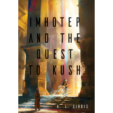
As a big fan of Al Sirois’s novel Murder in Mennefer, an absorbing and briskly paced coming-of-age story set in ancient Egypt, I was delighted to learn of a forthcoming sequel to it: Imhotep and the Quest to Kush. Like its predecessor, this new novel immerses us in the adventures and travails of an intellectually curious young man, Imhotep, who has developed a special interest in herbs and spells that can heal or improve the health of the sick. Imhotep’s interests and abilities bring him into the orbit of the politically powerful and those acting against them, which at times puts him in grave danger. In Imhotep and the Quest to Kush, challenges and dangers introduced in the first novel ratchet up to more perilous heights, creating an engrossing and suspenseful reading experience.