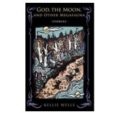

This entertaining and deeply affecting novel-in-stories, set in 1919, immerses us in the lives and travails of various members of Doc Bell’s Miracles and Mirth Medicine Show, a traveling ensemble of musicians, acrobats, and other performers who, depending on chemistry or circumstance, find love or discord, common cause or conflict, with their fellow show members. Allen takes us into the heart of these relationships, and into the interior lives of individual characters, creating an illuminating and satisfying experience for readers.
Making a journey or quest
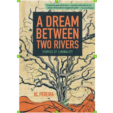
KL Pereira’s captivating new collection of short fiction, A Dream Between Two Rivers, carries the subtitle “Stories of Liminality.” True to that description, many of the stories explore experiences of being on the verge—or at the edge—of a new identity, reality, or understanding. This makes for dynamic storytelling, as does the fact that the collection isn’t tied down by any one stylistic convention.
Many of the stories draw on elements of myths, folklore, or fairytales, and like those types of tales, they take us into strange, often dark situations that, however surreal, echo the emotional and psychological struggles of lived human experience.
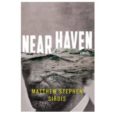
May 1st, 1988. In Near Haven—Matthew Stephen Sirois’s provocative and deftly paced debut novel—it’s the date a comet is predicted to strike the Earth, ending civilization. In the face of what appears to be certain doom, society crumbles in advance of the comet—from helplessness and hopelessness, and from the violence they fuel.
But not everyone is hopeless, including the novel’s protagonist and conscience, Tom Beaumont, whose story begins about ten months before the comet’s expected arrival. A boat builder in the fictional seaside town of Near Haven, Maine, Tom is skeptical about assurances that the comet will strike, and about pretty much every other variety of received wisdom. His views isolate him from just about everyone other than his friend Neville “Nev” Bradford, who, with Tom, struggles to survive as social order dissolves.
A woman is delivered to love—and, later, to grief—by the powers of the moon and the sea; a father who can speak for the dead, and a son who can speak for animals, find that they can’t communicate with each other; Death, in his adolescence, moves reluctantly toward adulthood and his powers of annihilation.
These are just a few of the characters and situations that figure into Kellie Wells’s fabulist story collection God, the Moon, and Other Megafauna, winner of the Richard Sullivan Prize in Short Fiction. Although this book is slim, its stories are as detail-dense and strange as an enchanted forest, and they are nothing that can or should be rushed through.
“I never thought I’d be the kind of person who could say things like, ‘Yes, I’ve spent a little time in jail,’ or, ‘If you count second cousins then, yeah, I’ve had sex with a relative.’ I also never thought I’d be married and divorced enough times for it to be financially sensible to invest in a courthouse parking permit. But, there you go.”
So observes Rachel Bennett, early in the witty, wickedly funny novel in which she stars: Leaving Is My Colour, by Amy Burns. As soon becomes clear, divorce and jail—the consequence of feeding a drug addiction—are far from Rachel’s only problems. The root of many of them is her deeply dysfunctional family: her well-meaning but mostly absent father; her selfish, judgmental mother; and her older sister, Julie, a bottomless source of disparagement and hostility.
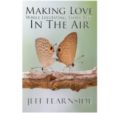
Jeff Fearnside’s début story collection, Making Love While Levitating Three Feet in the Air, is rich in so many ways: in its deep explorations of diverse lives and experiences; in its immersion in place, which often becomes a character itself; in the subtle surprises of several tales—surprises that, retrospectively, feel completely earned and natural.
But one of my favorite aspects of the book is the way it explores the solo mission—certain characters’ efforts to find their way, largely alone, through difficult periods or situations in their lives.