
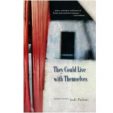
An oft-repeated criticism of small towns is that too many residents have an unsavory and insatiable interest in the lives of their neighbors, an interest that no amount of acreage—geographical, emotional, or social—can discourage. One of the many strengths of Jodi Paloni’s début story collection, They Could Live with Themselves, is how it acknowledges a corollary truth: the impossibility of fully understanding the experiences or realities of others—sometimes, even those with whom we share a roof. By immersing us in the lives of residents of one fictional community, Paloni honors, with great compassion and insight, both private realities and the ways in which individuals do—or don’t—connect with others.
Making art
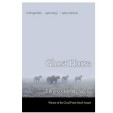
One of my reviewing regrets of late is my delay in highly recommending Thomas H. McNeely’s powerful and moving coming-of-age novel Ghost Horse (winner of the Gival Press Novel Award).
The setting is mid-seventies Houston, and the central character is Buddy Turner, who at the start of the novel is leaving Queen of Peace, a largely Latino school in one part of the city, for an all-white school in another. The schools seem worlds apart given the racial divide between them, and in the city at large. We sense this divide from the very beginning of the novel, when Buddy and his good friend Alex Torres make their way from Buddy’s last day at Queen of Peace to Alex’s home.
Reading Norah Labiner’s latest novel, Let the Dark Flower Blossom, reminded me of watching “Tinker Tailor Soldier Spy”: the multiple-episode BBC series released in 1979 (not the greatly condensed remake that hit theaters in 2011). A certain amount of disorientation is built into the experience: mysteries are wrapped in mysteries, and the paths to resolutions (to the extent resolutions exist) are rarely clear or trustworthy. Yet with both the TV series and the novel I was driven forward by the mysteries’ peculiar unravelings and, in the latter case, by the haunting beauty of Labiner’s writing.
In this unflinching and perceptive début novel, Jill Di Donato describes one young sculptor’s struggle to rise above the din of the 1980s art world and to discover her true voice. In the process, she finds herself confronting past wrongs—both those she committed and those committed against her.
Though Beautiful Garbage makes for a good summer read, it’s not a light one—and to my mind that’s only a good thing. This novel won’t let you off the hook easily, intellectually or emotionally.