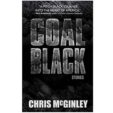
With page-turner plots that take us to dark places, on both sides of the law, Chris McGinley’s rural-noir story collection, Coal Black, is a deeply satisfying read. What makes the book even more captivating is how deeply rooted each story is in the book’s setting: the hills of eastern Kentucky, a place of both natural beauty and human struggle, and to certain of McGinley’s characters, a place where figures from local folklore and legends can sometimes feel just as real–and just as threatening–as a gun-toting thief or drug dealer.
Settling scores
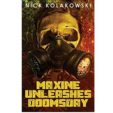
In his gripping and thought-provoking new thriller, Maxine Unleashes Doomsday, Nick Kolakowski imagines a post-apocalyptic, post-United States that feels disturbingly plausible, given the way things are going with our climate, our political divisions, and our growing dependence on technology.
Rising seas have turned New York City–the setting of some key scenes–into a nightmare version of Venice. America is no longer just divided; it’s completely fractured, having descended into a conglomeration of rival clans and territories, the highways connecting them under siege by bandits and patriot-movement-like gangs. And in perhaps the darkest development, artificial intelligence has begun to surpass human intelligence, assuming power-grabbing forms that make Alexa, Siri, and robotic vacuum cleaners look downright quaint by comparison.
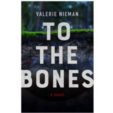
Some of my favorite novels are those in which the setting is integral to the story. In Valerie Nieman’s thrilling, genre-bending novel To the Bones, the richly rendered setting is inseparable from characters’ fears, strengths, and weaknesses and from nearly every tragedy and triumph in the story.
The novel takes place in Redbird, West Virginia, run for generations by a coal-baron family, the Kavanaughs, whose evils run far deeper than their exploitation of the land and its people. To help achieve their ends, the Kavanaughs seem to draw dark, otherworldly powers from the coal, and from the land itself. And these powers appear unstoppable, until a few townspeople, and an outsider with some otherworldly powers of his own, try to fight back–often, with deadly consequences.
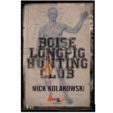
From the start of this fast-paced thrill ride of a novel, the main character, Jake Halligan, is in danger. A bounty hunter, Jake has made lots of enemies among those who break the law, and even among some who enforce it. So when a body of a young woman turns up in his gun safe, it’s possible that one or more of these foes are trying to frame him, or send him a threatening message.
But as Jake soon discovers, bigger, more powerful forces are arrayed against him, for reasons that reach far back before his bounty-hunting days. And he learns that he is to become not the hunter but the hunted, in a decks-stacked-against-him challenge echoing the one at the heart of the classic short story (and movie) “The Most Dangerous Game.”
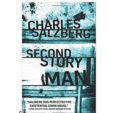
The most enthralling competitions involve equally talented opponents who have something to prove, ideally a something that runs deeper than the game at hand. In his gripping novel Second Story Man, Charles Salzberg immerses us in this very sort of rivalry, delivering far more than just thrills.
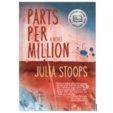
To what lengths should we go for a cause—or a person—we’re passionate about and can’t imagine losing? This question lies at the heart of Julia Stoops’ début novel Parts per Million, a suspenseful and harrowing exploration of high-stakes activism, sorely tested friendship, and uncertainly fated love.