Interview with Wendy J. Fox, author of The Last Supper
Through Small Press Picks, I’ve had the pleasure of reviewing–and highly recommending–four works of fiction by Wendy J. Fox: the novels If the Ice Had Held and The Pull of It, and the story collections What If We Were Somewhere Else and The Seven Stages of Anger.
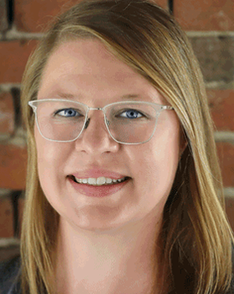
Wendy J. Fox
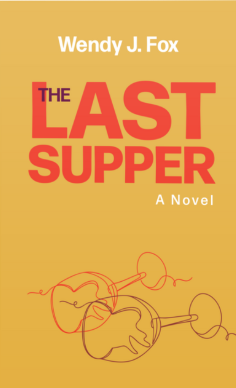
When I learned that Wendy has a new novel, The Last Supper, coming in April, I was eager to read an advance copy. Having done so, I’m happy to recommend it as well.
The novel focuses on three frenzied months in the life of forty-year-old Amanda, a stay-at-home mother who on top of trying to launch a momfluencer brand, is raising two young boys (with virtually no help from her husband) and facing the endless task of keeping the household running. At the same time, her marriage seems to be falling apart.
By taking us day-by-day through Amanda’s travails, the novel explores a reality that many women, especially mothers of young children, will recognize: shouldering most (if not all) of the responsibility for raising the kids, cooking, cleaning, and managing other household chores–burdens that inevitably lead to sacrifices. For her part, Amanda has little to no time to pursue her own creative interests, much less figure out a viable way to earn money while running the household. (Having tried multi-level marketing, as so many other stay-at-home mothers have done, she has come to see it as the losing proposition it typically is.)
But through ongoing connections to certain women in her life–a beloved neighbor, a dear friend from college, and her own mother–Amanda begins to see new possibilities for herself and her future. Here and throughout, the novel tells her story with insight, complexity, compassion, and goodly doses of humor.
Recently, I had the pleasure of interviewing Wendy about The Last Supper and other topics connected to her work. Our Q&A follows.
–Beth Castrodale
 BC: You write so perceptively about people who are at crisis points, or turning points, in their lives. In some cases, they’re willing to take big leaps with the hope of changing things. I’m thinking not only of Amanda but also of the protagonist from your novel The Pull of It. Feeling depressed and at sea in her marriage, that character goes on a solo vacation that turns out to be a possible new life in another country. What draws you to these situations in particular?
WJF: Thank you for pulling on that through line. I’m interested in those types of crises points because I feel like when we are in the process of living our lives, there are so many small everyday choices that obscure our perception and processing of the larger questions we might be asking if we had more bandwidth.
For example, in The Last Supper, the specter of what’s for dinner looms so large in Amanda’s life that she is paying a lot less attention to her own emotional and physical health than she could be if she just had some help.
My characters don’t start out with the idea of making a grand change or blowing up their lives; it’s more that their simmering pots start to boil over. There’s some connection there of how I personally make big decisions: I’m pretty slow. I will turn things over, think a lot, kind of do nothing other than ruminate, and then when I feel actually ready, pull the rip cord—which may seem dramatic to people around me, but from my perspective it took months. Or a year.
BC: I love the way The Last Supper considers the effects of socioeconomic developments that haven’t always served women well–especially stay-at-home mothers who want to earn some money. For example, the book touches on the grift of multi-level marketing schemes and also explores momfluencing, which is far from a sure way to make money. Did these trends inspire the novel in any way, or did they come to mind after you started developing Amanda’s character and story?
WJF: I worked in corporate tech marketing for a long time, and I was always reading the blogs and articles about work life, and something that really stuck with me was that most workers would take a pay cut for more flexibility. The rise of working from home and hybrid schedules in the post-COVID era has brought this conversation much more to the fore, but it was absolutely a thing well before the 2020 lockdowns.
For women cut off from economic agency via staying at home to raise kids, the mommyblogs of an earlier era or the momfluencing of this one, and the persistent false promise of MLM pyramid schemes is that idea of flexible earning. The problem is that it rarely works. I feel both like I can see the predatory nature of multi-level marketing and understand why people would be drawn to it.
Actually, when I was in college in the late 1990s, I went to a Cutco sales recruiting event. Cutco is an MLM that sells knives—and this should be one of the easiest jobs to get, since it’s not really a job, but a commission-only gig. Still, they rejected me because I didn’t know enough people in my college town who I could reasonably sell knives to. I give the recruiter props for not pulling me into the scheme. It would have been a disaster. But, at that time, I was also looking for flexible work. I ended up getting a job in the produce section at a union grocery store, which was a much better choice, even though it was hard to get up at four in the morning to set the wet rack so I could be at class by eight.
BC: I also admire how you show the importance of friendships, especially at crisis points in our lives. In Amanda’s case, she gets valuable emotional and practical support from her nextdoor neighbor, Dani; from her longtime friend, Sarah; and, increasingly, from her mother, with whom Amanda grows closer over the course of the novel. How did the friendship angle surface for you as you were writing the novel? Did you see it as a sort of counterweight to some of the fraught relationships in the book? I’m thinking in particular of Amanda’s relationship with her husband, who often seems distanced from her and their children, and from the responsibilities of keeping the household running.
WJF: Friendship is nearly always a counterweight, isn’t it? There’s a great deal of discourse about female friendships, and the importance of friendships generally beyond the construct of gender, but I’m interested specifically in how sometimes people—and yes, often women—isolate themselves in romantic relationships. Friends fall away. It’s hard to make time. Sometimes a partner feels left out.
Yet, friendship is so critical. I’m one of those people who has friendships that span a lifetime. Several of my closest friends grew up in my tiny hometown, and we have truly known and loved one another since childhood. I’m not arguing this is an ideal model. I am arguing that it matters to have platonic relationships that transcend geography, that go beyond phases in life, that carry you through the ends of marriages, or jobs, or any of the other difficult trappings of adult life.
It’s important, to me, that these kinds of friendships are never viewed as oppositional to romantic partnership.
BC: I appreciate how the novel gets at Amanda’s desire for a creative outlet and for a sense of agency, even as she can barely stay on top of the day-to-day tasks of parenting and tackling an endless number of chores. One creative outlet she tries out is Instagram, where she occasionally shares posts about her life as a busy mom. But for the most part, she seems to find her Instagram outreach burdensome and unrewarding. Do you see Amanda’s experiences as getting at some of the drawbacks of social media, especially as a form of creative expression and engagement?
WJF: I think there’s a weird veneer on social media—look at mine, for example—and it’s pretty clearly the brand Wendy J. Fox, not just me, Wendy.
That’s also how I have come to choose to use social. I for the most part only post about books, or share content I think might be useful, comment on posts to boost. There’s not a lot about my personal life outside of a few vacation pics.
Where Amanda struggles is the idea of mining with the hope to monetize her real life, and it’s a life that is also a struggle. She can try to lay that bare in the hopes that people relate, but she doesn’t really have a plan. She doesn’t know anything about how to be an influencer (which I also, am most definitely not). Looped into the idea that anyone can be a social media star, she’s not considering how it’s a full-time job on its own, and to your point, is this a creative expression? Is it façade? I don’t hold disdain for social media savvy types who have learned to capitalize on the algorithms, with the strong exception of those personalities who actively promote disinformation.
This concern is far outside of where Amanda is at posting about her messy kitchen. She’s trying. She’s not getting anywhere. That’s probably #relatable.
BC: Amanda’s mom, Camille, is such a great character. She’s whip-smart and funny, and she seems to know how to do everything well. Also, she sets a high standard for Amanda, especially considering that she raised Amanda as a single mom while advancing in her legal career. This sets up a kind of tension between mother and daughter. But in a certain sense, did you see them as more alike than different? Were there any particular revelations you had about their relationship as you wrote about it?
WJF: Camille is competent as heck, and when she reminds Amanda that “extreme independence is a trauma response,” Camille is most certainly referencing her own experience.
I see them as two sides to the same coin. Before Amanda is in the thick of the crisis that is the plot of the novel, she and her mother have a kind of friendly distance.
As I wrote about it, I thought a great deal about how parent/child relationships can change over time. In one of the best possible scenarios, as we age, we have the opportunity to return the care we received as children. That’s not how every family works, and either way, it’s not where Amanda is yet.
But, she’s getting there.
BC: I really enjoyed the moments of humor in the novel. For example, Amanda’s older son seems uninterested in any food that’s not orange, and her younger son seems to delight in peeing in unexpected places. What role do you see humor as playing in fiction, especially when it tackles serious and emotionally fraught subjects, as your novel does?
WJF: I think a little levity is called for at times. And frankly, who among us has not found a moment to laugh in a somber moment. Children are actually often great at this. I think of my godson, when he was quite young, at a wake for an uncle. My godson had found, of all things, a whoopee cushion, and could not resist plopping down on it to blast out fart sounds in the general direction of mourners. (For the record, the uncle would have absolutely loved this.)
In terms of fiction, the reader needs a break. Narrative inherently contains tension, and a break in the tension allows the reader to take a breath. A break in the tension allows the reader to process, for a minute, the harder things going on in the story.
I personally don’t write to be funny, but I do see humor in the absurd, and the laughable moments in my fiction are often in the incongruous moments or even the frustrating. How many things can Blake pee on? Let’s find out together!
BC: I believe this is your fifth book that’s been published by a small press. Also, you’ve been a great champion of small-press books through your Electric Lit column. Over your years in the indie-publishing world, have you noticed any significant trends or changes in this sector of the publishing landscape or in getting the word out about small-press books (as opposed to books released by the Big 5 publishers)?
WJF: The Big 5 still have a media advantage, and that’s always been true—or, at least it’s true for the lead titles of a season. I’m not sure that authors of non-lead titles on a Big 5 or their imprints feel like they have much media advantage.
Either way, it’s harder and harder to get the word out regarding books from any-sized publisher. There are many presses. Legacy media has less and less arts coverage.
I will, though, take this space to air a beef: lit mags!
I love lit mags, and publishing in lit mags was pivotal for me, but this is my call out to lit mag editors.
You have to start accepting book reviews on pitch. I know it is not the way lit mags operate, but it is simply too much to ask a potential reviewer to 1) acquire the book 2) read the book 3) write a review and then 4) submit it to you and wait six months for a response.
Especially when the response is usually “no.” Then the book has been out for half a year and the window closed.
Just take book reviews on pitch like a regular magazine. Please.
BC: Are you working on any new fiction projects right now? If so, is there anything you can share about them?
WJF: I’m working on a series of novellas. That’s about all I can say!
BC: Is there anything else you’d like to say about The Last Supper or about the process of writing it?
WJF: The only other thing I would say about The Last Supper or the process of writing it is that every book has something like its own weather. Rather than fighting it, dress appropriately so you can go all the way into whatever storm is brewing.