As a former journalist, and as a citizen who is deeply concerned about the multiple threats facing the news media today, I was heartened and moved by Sunshine Girl, which can be seen as an extended tribute to the reporters and editors who devote long hours to shedding light on issues that would otherwise be overlooked, or actively hidden from view. With depth and feeling, the novel also explores the struggles of a family with close ties to the news business.
I’ve long been a fan of escapist entertainment, never more so than in these deeply troubling times. So I was delighted to learn about–and read–Last Night at the Disco, a rollicking and hilarious thrill trip helmed by anti-hero extraordinaire Lynda Boyle. Lynda’s core desire is to leave her New Jersey hometown behind for good and to escape once and for all to New York City. She imagines that, once there, she’ll assume a central place in the East Village poetry scene and party for as many nights as she’d like at her beloved celebrity-magnet disco, Studio 54. These dreams are exceeded only by the size of Lynda’s ego, which is in constant need of feeding.
Although this novel, told entirely from Lynda’s point of view, delivers much-needed escapism, its pleasures are far from simple thanks to its insider perspective on her constant, and often brilliant, scheming. To say that she’s a beauty with brains is a gross understatement. It would be more accurate to say that she’s a beauty with war-room-level strategizing powers, and she deploys these powers ruthlessly.

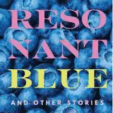
The stories in this unflinchingly frank and emotionally resonant collection explore multiple effects of the traumas that women face, whether from abusive or emotionally absent partners, from the physical or psychological strains of motherhood, from sexual harassment, or from threatened or enacted violence. In doing so, the stories shed an unsparing light on individual women’s fears, struggles, and anxieties and on the root causes of their traumas. The result is a haunting and deeply relevant collection, one that often indicts the larger culture.
As we approach or make our way through middle age, many of us ask some difficult questions of ourselves: Are we truly living the life our earlier selves envisioned? What dreams, or great loves, did we abandon–or not even give a real chance? This perceptive, emotionally complex, and often-heartrending novel grapples with these questions and more, while also suggesting that new possibilities aren’t just for the young.
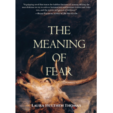
The stories in Alternative Facts feature notable real-world figures (for example, political consultant Kellyanne Conway, psychologist B. F. Skinner, photojournalist Burhand Ozbilici, novelist Thomas Pynchon, and media personality Paris Hilton). But because they are works of fiction, the stories take us where no journalist could ever tread: deep into the psyches of these figures, in ways that are, by turns, insightful, heartbreaking, and entertainingly absurd.
Three Guesses, a moving and revelatory novella-in-letters, takes us deep into the inner lives of the three correspondents, considering how a willingness to be open–even vulnerable–with others can form the basis of lasting friendships. The book, which won the 2023 Fugere Book Prize from Regal House Publishing, also offers a perceptive and layered exploration of how art can connect us in a search for meaning.
To my mind, Victors is the perfect historical novel, weaving together richly developed characters, a compelling plot, and a solid grounding in historical details. Together, these elements bring important aspects of World War I history to life. They also make for a fast-paced, entertaining read.
The novel’s main character is David Pierce, a sergeant in the 369th Infantry Regiment of the U.S. Army, which is fighting for the Allies in World War I–era France. (The 369th–made up almost entirely of African American soldiers and also known as the Harlem Hellfighters–did indeed serve in the war, to great distinction.) Because black soldiers are barred from serving with white soldiers in the U.S. Army, David and his men fight with the French, who welcome their support without reservation.