
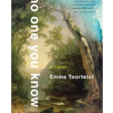
This richly layered deep dive of a novel explores the ways in which a profound loss can more than just shatter the lives of the bereaved; it can significantly challenge their closest relationships, and in some cases reshape their beliefs about how to make sense of the world, and of all the complications that life delivers to us.
The loss at the center of the novel is the death of fourteen-year-old Maddy, who was struck and killed by a drunk driver while walking down a country road with her closest friend, Indie. Indie, who escaped the same fate by chance, is both traumatized by this incident and devastated by the loss of Maddy. As she observes at one point:
Although the novel touches on how Maddy’s death affects her own family, it focuses primarily on the ways in which the loss upends Indie’s. To name just a few of the consequences, it reconfigures Indie’s interior life, leading her to mostly isolate herself from her parents and peers and to all but give up on schoolwork, something she’d once excelled at. Also, a sort of numbness seems to overtake Indie. Despite the life-changing loss of Maddy, she seems unable to fully express her grief. These changes in Indie arouse especially deep concern in her mother, Kate, who makes attempt after attempt to connect with her daughter, a mission that feels close to hopeless given Indie’s withdrawal from the world. The mission feels even more hopeless after an incident between Kate and Maddy’s father introduces more complications. (More on this below.)
Given its focus on Indie and Kate, the novel is told solely from their points of view, with chapters alternating between their perspectives. The author uses this approach to the best advantage, immersing us deeply in the frustrations, fears, doubts, and attempts-to-make-sense-of-things of both mother and daughter, allowing us to witness interior struggles that don’t always become apparent to the outside world but that inform both characters’ decisions and self-perceptions. For Kate’s part, she worries that she hadn’t been present enough for Indie before Maddy’s death, something she’s paying the price for now.
The novel’s exploration of the complicated dynamics of grief extends beyond just Indie. While Kate is deeply concerned about Indie’s behavior in the wake of Maddy’s death, her husband, Ethan, believes that Kate is overreacting, causing tension in their relationship. Underlying this tension are Kate and Ethan’s personal experiences with loss, and the different ways in which they have–or haven’t–faced it. As Kate tries to cope with ongoing grief from the recent loss of her mother, sometimes finding it difficult to hold back her emotions, Ethan grows impatient with her and expresses the belief that it’s well past time for her to move on. At the same time, Kate seems to believe that he’s never fully grappled with the death of his brother, Luke, from an overdose years before. Ethan never speaks of Luke to Kate, and she’s never seen him openly grieve. Does this suggest unfinished business when it comes to coping with a major loss, or does Ethan’s silence represent a different–but no less valid–means of finding a way to carry on? As the novel wrestles with answers to this question, it powerfully conveys the ways in which profound losses can leave behind lasting complications that extend far beyond the bereaved, sometimes posing serious challenges to relationships.
Another source of tension between Kate and Ethan, and between Kate and Indie, is a rumor that Kate initiated an affair with Maddy’s father, Kevin, in the wake of Maddy’s death. Although this rumor is false, it is based on the smallest kernel of truth. (In a vulnerable moment, Kevin made a pass at Kate that kindled feelings in her, but that she quickly rebuffed.) The rumor destroys whatever ties remained between Indie’s and Maddy’s families, makes Kate a social pariah, threatens to destroy Kate and Ethan’s marriage, and also drives an even deeper wedge between Kate and Indie, making it more difficult for Kate to try to help Indie cope with Maddy’s death.
In short, Kate’s world seems to be falling apart. And these and other trials–especially Maddy’s death, which could have been Indie’s death instead–heighten the sense of life’s randomness. Even as she seems to desire some degree of control over the sometimes-cruel unpredictability of life, Kate appears to understand the futility of this. But Indie moves in a different direction, tuning in to videos of an influencer she calls The Guy, who argues, among other things, that the self is an illusion and that reality doesn’t really exist. Such a perspective might offer a kind of negation of randomness, and of the pain that can accompany loss, which has an obvious appeal to anyone in a situation like Indie’s.
Here and at other points of the novel, I was captivated by the ways in which Indie tries to make sense of her new, Maddy-less reality. Although she’s become disengaged from her schoolwork, and from personal relationships, she remains an avid observer, and questioner, of the workings of the world, opaque though they often are. Yet her quest for truth doesn’t always lead to healthy places.
This brings me to the novel’s exploration of the role of digital media in both Indie’s and Kate’s lives. Although Indie’s online experiences (and eventual interactions) with The Guy hold out the promise of helping her find a way forward without Maddy, they also show how online influencers sometimes have less-than-altruistic agendas, leading followers down troublesome and potentially dangerous paths. For much of the novel, Kate is also quite present online, regularly posting to her If You Lived Here blog and interacting with multiple subscribers to it. In time, though, both her and Indie’s experiences in the digital world show how online interactions can fall depressingly short of more meaningful relationships, especially when one is most in need of deep and genuine connections with others.
Eventually, when a new crisis emerges for Indie–one related to her digital life–Kate’s ongoing efforts to stay connected to her pay off. Although I don’t want to give away the details, I will say that these scenes show the relationship between Kate and Indie in its rawest, most vulnerable form, with writing that does justice to everything that’s at stake at an exceptionally difficult juncture in both of their lives.
Yet even given this difficulty, the novel holds out a qualified sort of hope. Near the end of the book, Kate remembers how when Indie was injured or upset as a little girl, she’d repeat to herself the common parental reassurance: It’s okay, “[a]s if the words themselves could banish the pain.” Kate reflects that:
Sometimes this is indeed the best we can say to our children, our friends, our partners, and anyone else we love. As for Kate and Ethan’s relationship, there is hope that although it will never be the same, it might evolve into something that better suits the new reality, both theirs and Indie’s. No One You Know’s exploration of how relationships can change and adapt in response to significant challenges is just one way in which the novel makes for a compelling, emotionally resonant read.
Would My Pick be Your Pick?
If you're interested in ________, the answer may be "Yes":■ Explorations of how we cope with loss and grief
■ Stories about family conflicts
■ Stories about friendship
■ The effects of digital relationships