
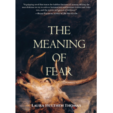
This riveting, perceptive, and richly layered novel explores the lasting effects of trauma, and how it can limit our ability to trust or love. It’s also a compelling mystery story, one that considers the possibility that sometimes, the greatest enigmas are posed by those closest to us.
Trauma has reached deep into the lives of both of the main characters, Lea Johnson and Paul Rilke, who grew up not far from each other in a small town in Michigan, where they remain as adults. Lea was raped at the age of thirteen, by a man who’d been a friend of her father. Since then, she has found it difficult to trust men and to feel and express love, even for her husband and children.
Paul’s trauma is rooted in his father’s cruel treatment of him, back when Paul was a boy. Seeing Paul’s sensitivity as a sign of weakness, his father aimed to toughen him up by making Paul do the last thing he’d ever want to: hurt animals. The novel portrays this experience in harrowing detail, making it clear why it haunts Paul into the present. It’s also clear why a deer cull now underway in his community, where he’s working as a police officer, repulses him.
It turns out that Lea and Paul crossed paths shortly after Lea’s rape, when she dragged a Mauser to where some boys were shooting at cans, and where Paul was hanging back from the action. From Paul’s perspective, Lea was a “mousy girl” who proved she was “gutsy” by shooting the can off a dog’s back on a dare. Unknown to Paul, Lea had hoped to use the Mauser, which had belonged to her grandfather, for vengeance against her rapist–something she didn’t achieve at the time. (But the possibility of vengeance is far from put to rest, as noted later.)
To the novel’s great credit, its exploration of Lea’s and Paul’s traumas draws no neat, black-and-white conclusions. Instead, it authentically conveys the complications and sometimes-confusing emotions that can accompany deeply distressing or disturbing experiences. For example, not long after her rape, Lea thinks back on her experiences with the man who harmed her:
When Lea and Paul cross paths in the present, neither one of them recognizes the other or realizes that they’d first encountered each other years before, at the can shooting. Lea is now living with her husband and two children in a suburb that was built on what used to be part of Paul’s family’s old farm. One night, as part of his duties as a cop, Paul is summoned to Lea’s house in response to a 911 call. Lea made the call after a teenaged boy kept pounding on her door and refusing to leave, making her worry that he’d break in if she didn’t give in and let him inside. Contributing to her sense of alarm is that the boy was not wearing trousers, despite the cold. But by the time Paul arrives on the scene, the boy is long gone, leaving Lea concerned for his welfare, especially given the cold weather. Paul tries to reassure her that the kid is probably the victim of a prank and that, most likely, he’ll get home safely.
But Lea isn’t reassured, and she keeps reaching out to Paul to see if the boy has resurfaced, feeling even more concerned when she learns that he hasn’t. But the missing boy isn’t the only reason Lea feels unsettled. The year before, outside their previous home, a band of young men beat her husband, Jay, nearly to death for no reason, leaving permanent physical, emotional, and perhaps cognitive scars. Jay’s behavior since the beating has deeply disturbed Lea, becoming one more tension point in their already troubled marriage. For one thing, Jay has become maniacally obsessed with taking part in the deer cull, frequently occupying a shooting station that’s been set up in a tree on their property. Also, he’s started leaving firearms out in the open in their house, sometimes within reach of their children.
Lending the scenes between Lea and Jay special poignancy is her own experience with trauma, and the fact that as a researcher, she’d dedicated herself to the goal of conquering fear, as manifested in post-traumatic stress disorder. Despite her personal and research experience, Lea is unable to help Jay cope with his fraught mental and emotional state; in fact, she seems to feel more distanced from him, which appears to be rooted, at least in part, in her fear of the person he’s become.
In certain ways, Jay poses a deepening mystery to Lea. There’s also the ongoing mystery of what happened to the boy who trespassed on their property. It turns out that Jay, who’d been at his deer-shooting station that night, confronted the boy before he was reported missing, leaving Lea to wonder whether Jay is hiding something in connection to the boy’s disappearance.
The novel weaves the mysteries of Jay and the missing boy together in chilling ways that keep Lea–and readers–guessing right up to the final pages.
Like Lea and Jay’s relationship, Paul’s marriage is also troubled. In fact, he has moved out of the home he shared with his wife, on her orders. Although he holds out hope for a reconciliation, he also finds himself becoming attracted to Lea. The feeling becomes mutual, although Lea seems wary of growing closer to Paul, with whom she’s frank about her emotional state: “I can’t love. Not properly. Not like other people.”
Lea’s past trauma, always just under the surface of her day-to-day life, re-emerges with force when a friend, Dinah, tells Lea that she knows where her rapist currently lives, and that she can get them into his apartment. It also becomes clear that vengeance against him might not be as difficult as it proved to be in the past given his now-frail physical state, which renders him all but helpless. This new possibility for revenge, and the circumstances surrounding it, poses a difficult dilemma for Lea. The scene in which she confronts this dilemma is both harrowing and revelatory, showing Lea wrestling with complicated questions and contradictory emotions: Would killing the man be an act of revenge or of mercy? Alternatively, is there any place for forgiveness, even for the person whose actions have had such devastating and lasting effects on her?
This scene is just one example of something the novel does masterfully throughout: portray moral complexity in many dimensions. For example, characters wrestle with whether taking another life is ever justified or merciful, as in the case of the deer culling, the killing of tumor-infested mice in the lab where Lea works, and in the most extreme example, the potential killing of Lea’s rapist. As The Meaning of Fear confronts this question, Paul Rilke might be seen as the novel’s moral center. Even though he’s a cop and thus no stranger to potentially dangerous situations, he seems to take the stance that violence and killing, however they may be justified, should never be thoughtlessly carried out or easily tolerated, even when they’re spun as serving a greater good, in the case of the deer culling, or as a form of mercy, as when he shoots a doe who’s suffering after being hit by a car near Lea’s house. It’s these characteristics of Paul, and his sensitivity, that help shape the outcome of a highly contentious and dangerous episode near the end of the novel. Also shaping the outcome is Lea’s gutsiness, a characteristic that she’s held onto since the day she shot that can off a dog’s back. In this tense episode and other scenes, Lea’s and Paul’s individual traumas affect their actions and reactions, and also build deeper connections between these two characters, lending an emotional richness to their relationship and to the novel as a whole.
These deeper connections are one of the elements that give the novel a sense of hope, and that hold out the possibility of redemption and healing. In the end, The Meaning of Fear is a compelling, unsparing, and unforgettable novel.
Would My Pick be Your Pick?
If you're interested in ________, the answer may be "Yes":■ Explorations of the long-term effects of trauma
■ Explorations of moral complexity
■ Stories of marital conflicts
■ Mysteries
■ Novels featuring life in small towns